01 / THE PROBLEMThe problem
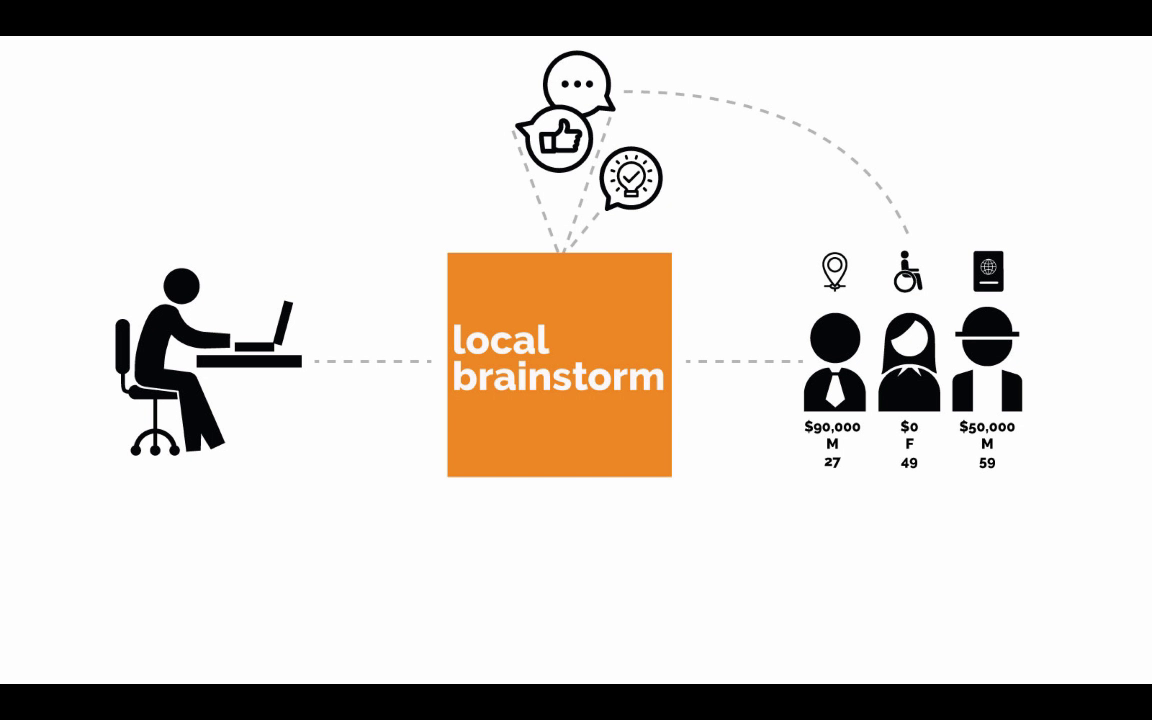
Local Brainstorm began with a question: how could people help shape their community without navigating long planning documents or being able to attend every public meeting? I wanted to connect residents’ ideas and lived experience with the people responsible for turning civic priorities into action. The February 2016 concept statement focused the initial exploration on homelessness in Seattle.
02 / MY ROLE AND THE SHARED EFFORTMy role and the shared effort
I developed the Local Brainstorm concept and led its product and pitch direction, working with a volunteer community and advisers. The surviving concept statement, pitch script, interface designs and year-end plan document that work. This archive presents the shared effort through my contribution; it does not attribute every interface or technical component to me alone.
03 / THE APPROACHThe approach
The first proposal was an open-source, public idea-management system: collect problems and ideas, cultivate responses, coordinate implementation, share completed work and carry learning into the next cycle.
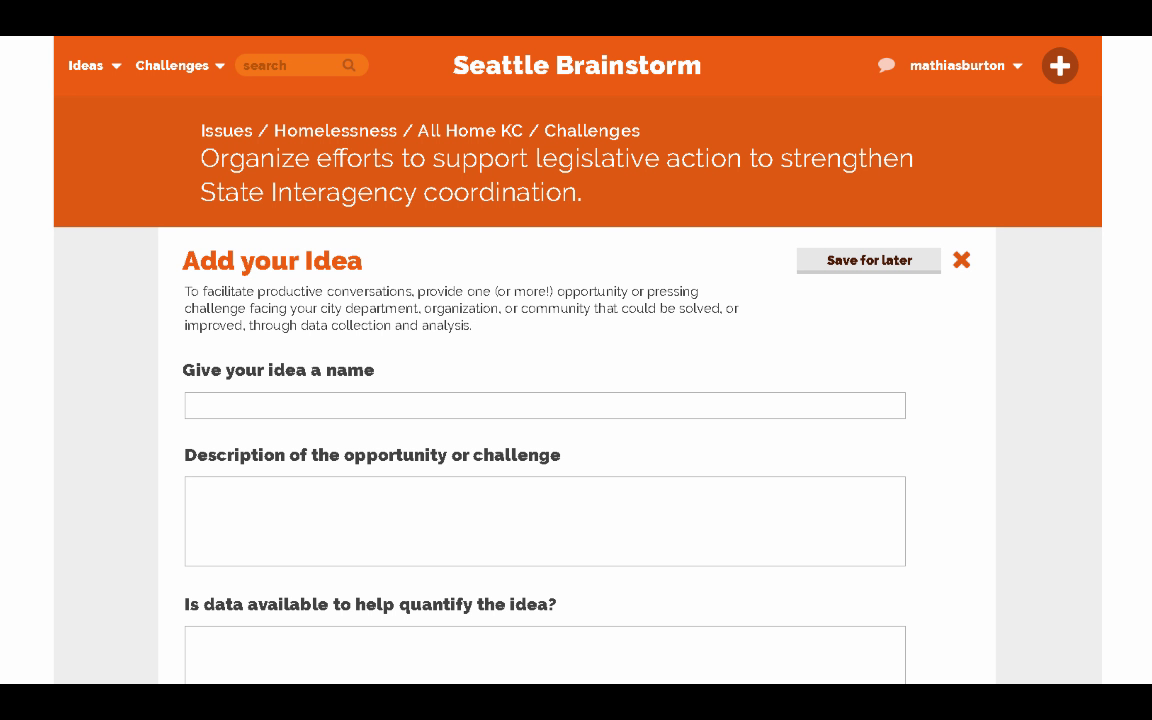
The September 2016 pitch made the interaction more concrete. Planners would publish initiatives; community liaisons and local organizations would help people participate; feedback would become usable information for the next planning decision. Interface concepts explored that bridge between institutional work and public participation.
By the December 2016 plan for 2017, I was organizing the effort around three connected activities: government innovation consulting, portfolio project management and community building. Planspace, Photoshare and Text2Gov represented different ways into that larger system. The roadmap also proposed additional tools, pilots and organizational steps. Those plans are preserved as plans.
04 / WHAT THE WORK PRODUCEDWhat the work produced
The work produced a concept statement, pitch presentations and videos, interface artifacts and a plan for developing the organization. Together, they make the original product direction inspectable rather than leaving it as an idea described from memory.
The pitch and application feedback also reveal why the presentation needed another pass: reviewers wanted a clearer product definition, a more concrete account of active participation and stronger examples of successful pilots. Some questioned how the nonprofit purpose and contractor business model would fit together. Those are useful design and strategy questions, not evidence that the software had been validated.
This retrospective brings the product, participation model and evidence limits into one account. Local Brainstorm belongs in my longer civic-design lineage alongside the Social Good Series, Democracy Lab and later work.
The platform remains unfinished and paused. In my retrospective account, I paused the effort because I was not sure the sum was greater than the parts, then shifted toward separate ventures. This historical presentation consolidates the work; it does not mark a completed platform or a relaunch.
05 / DATES AND EVIDENCE LIMITSDates and evidence limits
According to my retrospective account, I began Local Brainstorm in 2015. The surviving artifacts reviewed here date to 2016, with a plan for 2017. In 2021, during the pandemic, I consolidated and reflected on that earlier work rather than launching the platform. I did not work on the platform directly enough to complete it.
The original plan’s accounts of volunteer activity, prototypes and relationships are contemporary self-reports. Roadmap dates, budgets, funding models and proposed pilots do not establish execution, adoption, revenue or community impact. Pitch/application evaluation is not an app usability study. The videos have been visually reviewed; their spoken audio has not been transcribed or verified, and the surviving script is treated as a separate source.
This is a historical concept and design archive. Raw research, contact details and recordings remain private; any future product work needs a separate scope and current validation.